Should I Build or Buy an AI Agent for My Business?
A practical build-versus-buy framework for choosing a packaged AI agent, a custom system, or a hybrid path without hiding the real operating work.
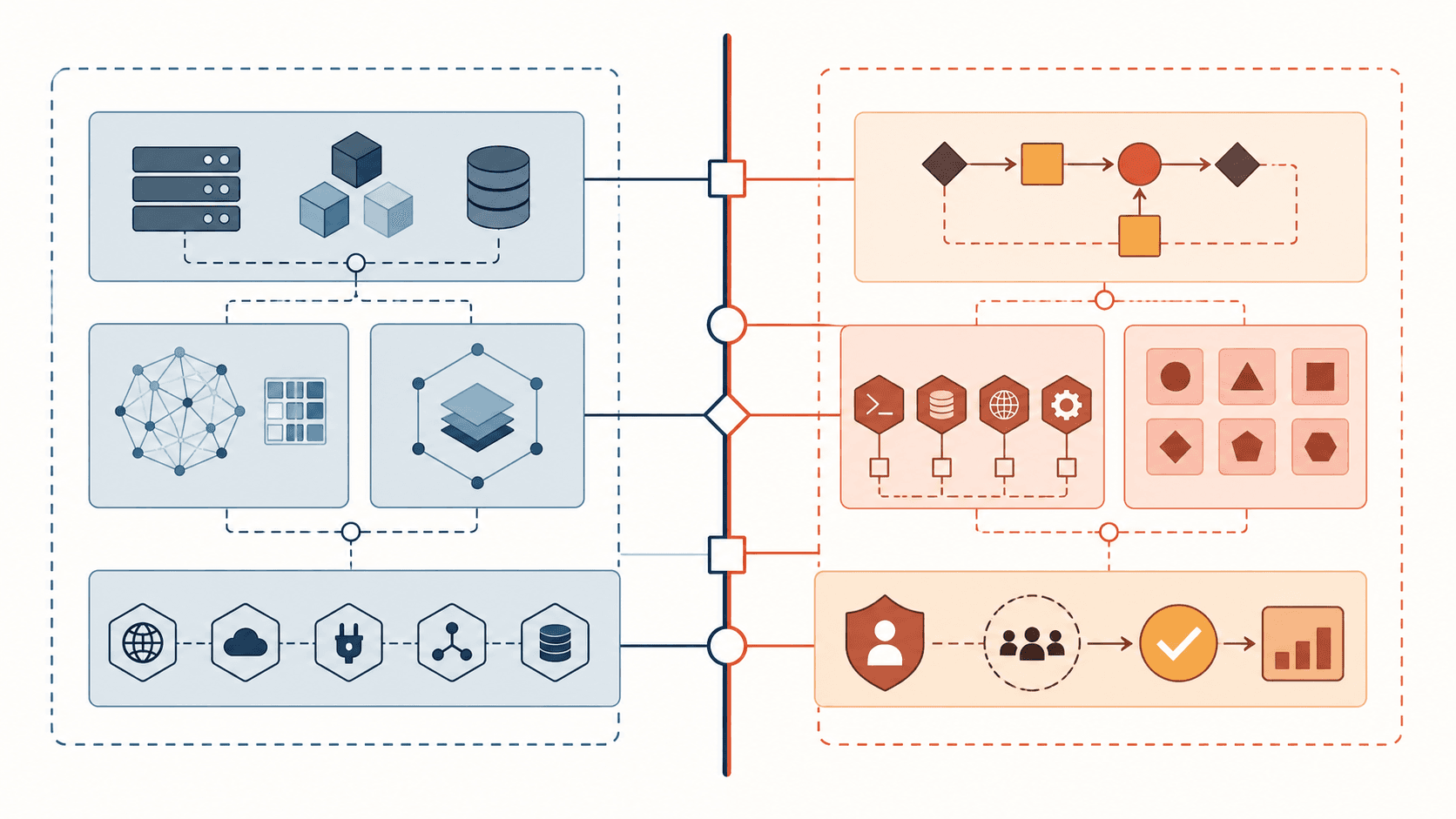
The hard part is rarely finding an AI agent. It is deciding what you want to own after the demo ends.
If the workflow is already a credible agent candidate, buy or configure a packaged agent when the work is common, speed matters, and the vendor satisfies your data and control requirements. Build the business-specific layer when the workflow itself is a competitive advantage, needs unusual integrations, or demands control a product cannot provide. For many businesses, the sensible answer is hybrid: buy the commodity runtime and build the narrow part that makes the workflow yours.
Start with the decision you are actually making
“Build or buy an AI agent” can hide three different choices:
- Does this workflow need an agent? A fixed automation or one LLM call may be enough. The site’s AI agent decision framework covers that earlier question.
- Which parts should your team own? You might buy a managed runtime, but still own the instructions, business rules, tools, evaluation cases, and approval boundaries.
- Who carries the consequences? A vendor can host the product. Your business still owns the outcome when the agent sends a message, changes a record, exposes data, or gives a customer the wrong answer.
This article addresses the second and third questions. Treat the agent as a whole operating system, not as a prompt. OpenAI describes an agent as a system that manages workflow execution, selects tools, and knows when to complete or hand back work, while Anthropic separates fixed code-defined workflows from systems where the model directs its own process (OpenAI, Anthropic).
What do “build” and “buy” mean here?
The comparison is not “write every line yourself” versus “press a button.” In practice, the options look like this:
| Path | What you own | What you are accepting | Usually a fit when |
|---|---|---|---|
| Buy or configure | Workflow configuration, data connections, permissions, tests, and vendor relationship | Product boundaries, contract terms, platform changes, and portability limits | The problem is common enough to match a mature product and speed matters |
| Build custom | Runtime or orchestration, business logic, tools, data flows, tests, deployment, and operations | More internal work and more responsibility for reliability, security, and change | The workflow is differentiating or cannot fit a product without awkward compromises |
| Hybrid | The business-specific rules, tools, and evaluation layer; a purchased model, runtime, or connector layer | Some vendor dependency, plus integration work at the seam | The infrastructure is commodity but the workflow and controls are not |
“Buy” is therefore not “no engineering.” A packaged platform may provide connectors, deployment, lifecycle management, analytics, and governance, but you still need to select data sources, supply credentials, define access, test the published version, and decide what the agent may do. Microsoft’s own documentation lists these prerequisites and separates simple small-team agents from broader, more governed deployments (Microsoft Learn, Microsoft connector documentation).
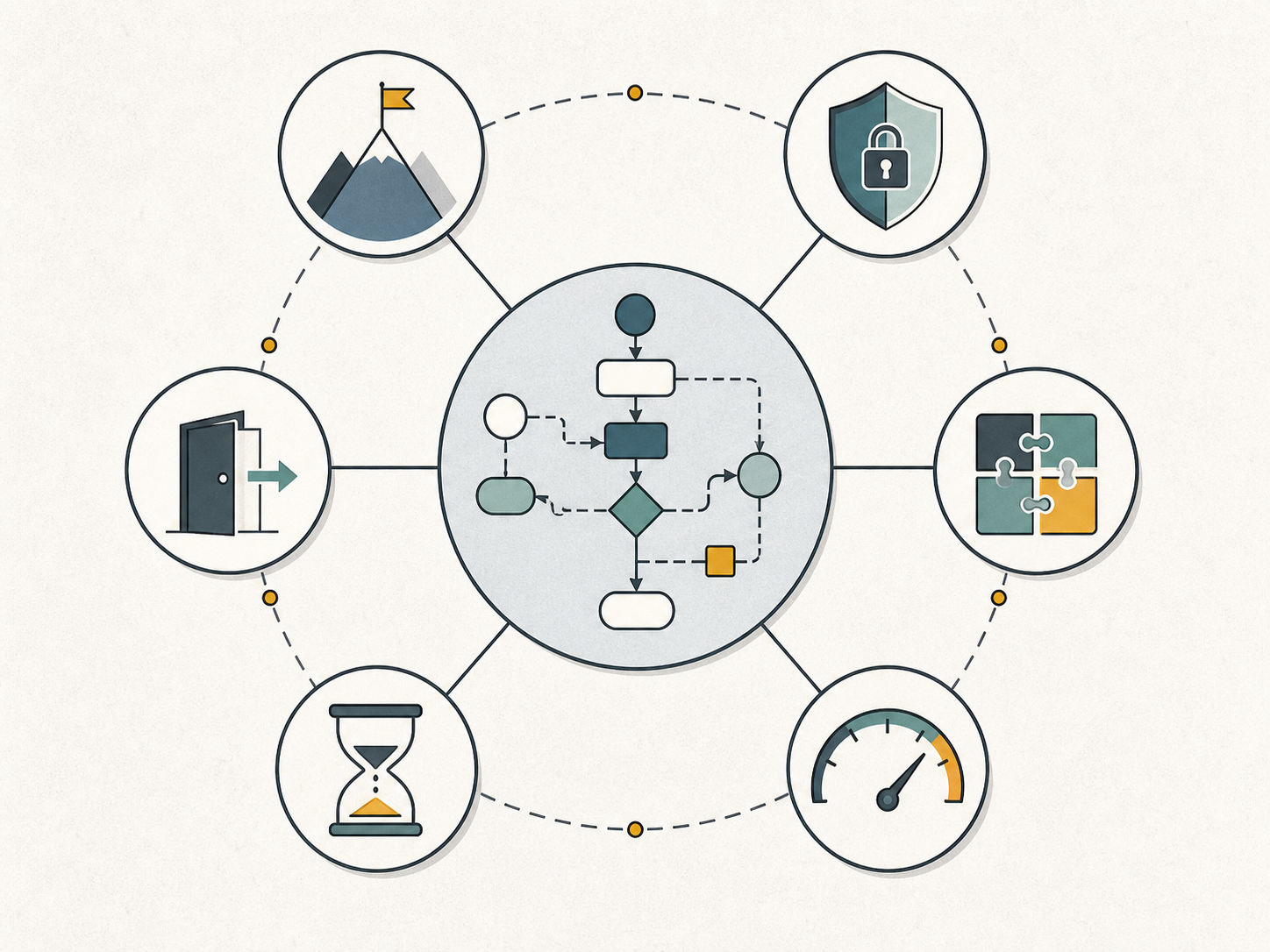
Use the six-question ownership test
The following is my decision aid, not an industry standard and not a substitute for a security or financial review. Score each question from 0 to 2 for the build signal:
- 0: strong buy signal
- 1: mixed or hybrid signal
- 2: strong build signal
Do not turn the total into fake precision. The value is in making the disagreement visible.
1. Is the workflow part of your business edge?
If the agent performs a generic job, such as routing ordinary requests or answering routine internal questions, a product that already fits the job deserves a serious trial. If the agent embodies a distinctive method, pricing rule, research process, or customer experience, the logic is closer to intellectual property. That is a build signal.
Ask: If a competitor bought the same product and copied the configuration, would we still have an advantage? If the answer is no, buying becomes more attractive. If the answer is yes because your process is the advantage, own more of the layer that expresses it.
2. How much boundary and control do you need?
List the data the agent can read, the tools it can call, and the state it can change. Then mark actions that require strict identity, approval, auditability, or a reversible fallback.
A product may meet those needs. Do not assume it does. Check whether it supports the identity model, permission boundaries, environment separation, versioning, trace retention, and rollback your workflow requires. Microsoft documents controls for authentication, data policies, connectors, channels, HTTP requests, and event triggers in one packaged platform; those controls are useful evidence of what to ask a vendor, not proof that every vendor has equivalent controls (Microsoft data-policy documentation).
High control requirements do not automatically mean “build everything.” They mean you must own the boundary, even if a vendor supplies the engine behind it.
3. How unusual are the integrations?
Count the systems the agent needs to use, then separate standard connectors from the parts that require custom APIs, awkward authentication, legacy screens, or a new internal service.
Buy is strongest when the product already connects to the systems you use and exposes the actions you need. Build or hybrid is stronger when the valuable work depends on a private data model, a nonstandard transaction, or orchestration that the product cannot express cleanly.
Do not score integration by the number of logos on a vendor page. Verify one complete action in a sandbox: the agent receives the request, authenticates as the right identity, calls the right tool, handles a failure, and leaves a record you can inspect.
4. Can you operate the system after launch?
This is the capacity gate. Someone must own test cases, prompt or policy changes, access reviews, incident response, usage limits, vendor changes, and the decision to pause the agent.
Anthropic recommends starting with direct model APIs and understanding what a framework does underneath, because mistaken assumptions can create customer errors (Anthropic). A build is not complete when the first run works. If no person or team can maintain that knowledge, a buy or hybrid path is usually safer.
The same applies to buying. The platform may reduce infrastructure work, but it does not eliminate ownership. Put a named internal owner on the vendor relationship and the workflow contract.
5. Is time-to-value more important than portability?
Buying can be the right answer when you need a bounded result quickly and the workflow is not your product. Building can be the right answer when the first version is an investment in a capability you expect to reuse.
The honest comparison is not build cost versus subscription price. Compare the date on which each path can safely handle a defined workload, including integration, testing, permissions, training, rollout, and correction time.
If the deadline is real but the workflow is strategically important, choose a hybrid pilot. Buy enough infrastructure to learn quickly while keeping the business rules, test cases, and data contracts portable.
6. What happens if you leave the vendor?
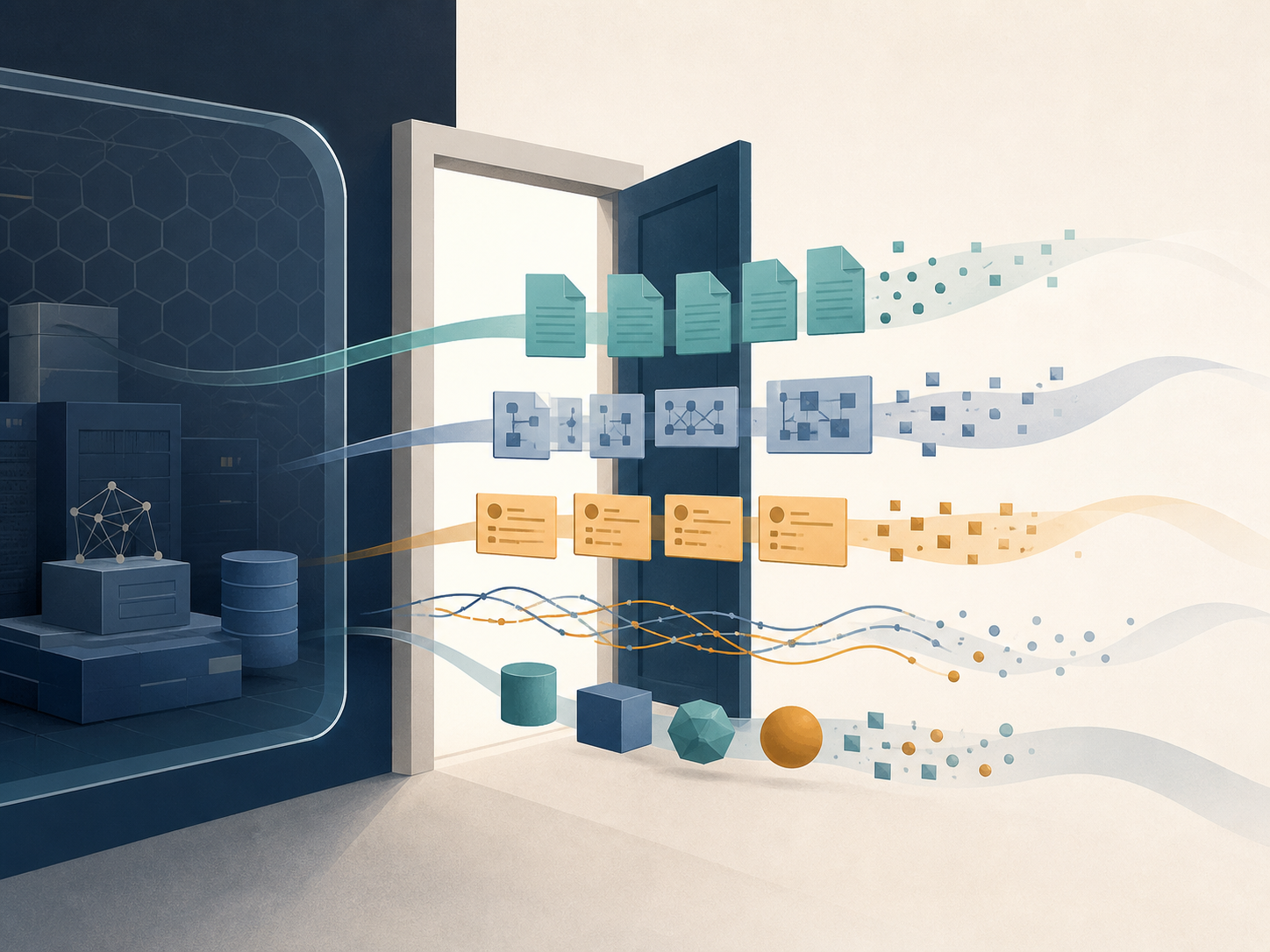
Ask what you can export: prompts, policies, tool definitions, evaluation cases, traces, knowledge content, user and task data, and outcome history. Ask what still works if the model, connector, or product tier changes.
This is not an argument for perfect portability. It is an argument for knowing the lock-in you are accepting. NIST’s Generative AI Profile says organizations should monitor risks and benefits from third-party resources and apply and document controls. OWASP likewise treats third-party libraries and frameworks as part of the agentic supply chain (NIST, OWASP).
Read the score without pretending it is a spreadsheet answer
Add the six scores, then apply two gates:
| Result | Interpretation | Default next move |
|---|---|---|
| 0-4 | Strong buy signal | Trial a packaged option against a fixed workflow contract |
| 5-7 | Mixed | Run a hybrid proof; buy the runtime and build the narrow business layer |
| 8-12 | Strong build signal | Design a custom or deeply extensible build, but confirm operating capacity first |
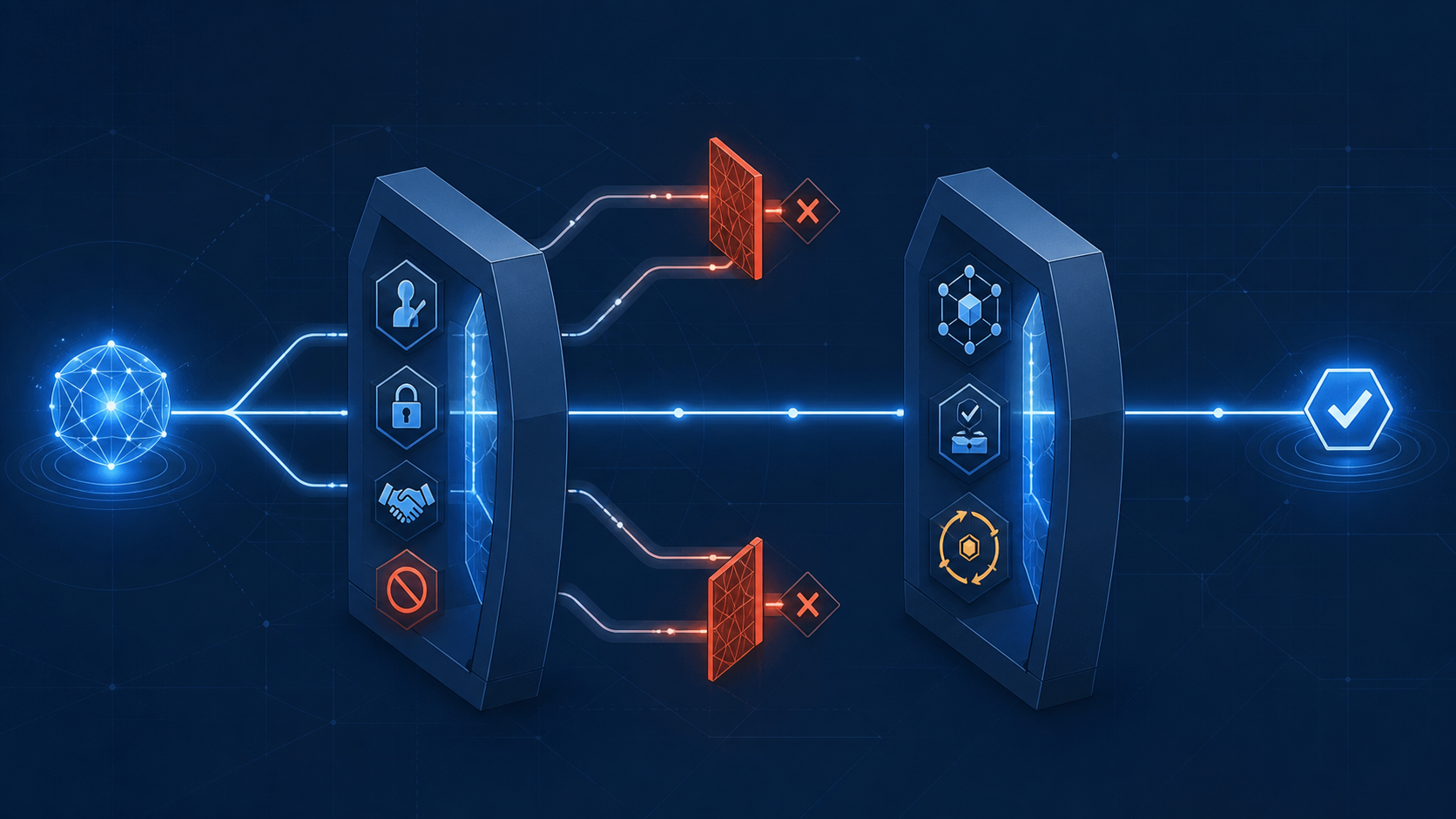
Capacity gate: if nobody can own evaluation, permissions, incidents, and change, do not approve a custom build merely because the score is high. Reduce scope, buy more of the managed layer, or find an owner first.
Control gate: if a vendor cannot meet a non-negotiable data or action boundary, do not buy it because it is fast. Either choose a product that can meet the boundary or build that boundary yourself around a narrower agent.
When does buying win?
Buying wins when the job is close to a known category, your existing systems are supported, and the value comes from using the capability rather than inventing it. Typical examples include internal knowledge assistance, common service triage, meeting or document workflows, and standard CRM actions, provided the product’s permissions and evidence fit the risk.
It also wins when your team cannot honestly staff the lifecycle. A vendor can supply a maintained product surface, but you still need an internal owner and a way to challenge what the product claims. Start with a narrow, read-only or approval-gated scope. Microsoft recommends publishing to yourself first, testing the published version, and applying authentication and governance controls before wider release (Microsoft publication guidance).
Buying is a poor choice when the product forces your workflow into a brittle set of workarounds, hides the evidence you need, uses credentials too broadly, or makes a safe exit impossible. “It has a connector” is not the same as “it can complete our transaction safely.”
When does building win?
Building wins when the agent’s behavior is part of the product or operating advantage, the workflow requires unusual control, or the integration itself is proprietary. It is also justified when the business needs a system that can be tested and deployed in a way a packaged product cannot support.
But build only what you need to own. Anthropic describes a progression from an augmented LLM to fixed workflows and then to more autonomous agents; that progression is a useful reminder that a custom agent is not the default starting point (Anthropic). You might build a small orchestration layer around a model API instead of building a general-purpose agent platform.
OpenAI recommends grounding routines in existing operating procedures and making each action explicit (OpenAI). Before writing code, turn the workflow into a contract: trigger, allowed data, tools, expected outcome, forbidden actions, escalation path, evidence, and operating limits. If the team cannot write that contract, it is not ready to own the build.
Why hybrid is usually a concrete choice, not a compromise
Hybrid means drawing a clean ownership boundary:
- Buy or reuse: model access, basic runtime, standard connectors, hosting, identity integration, or a platform’s admin surface.
- Build and own: business rules, tool wrappers, data contracts, evaluation cases, approval boundaries, outcome checks, and the workflow-specific user experience.
- Keep portable: prompts and policies, test fixtures, tool schemas, traces, outcome records, and the small adapter layer between your workflow and the vendor.
This path lets the team buy speed where the market is already good at supplying it and build the part that creates differentiation or control. It is not automatically cheaper. It is attractive because it limits what you must invent while keeping the important decision logic legible.
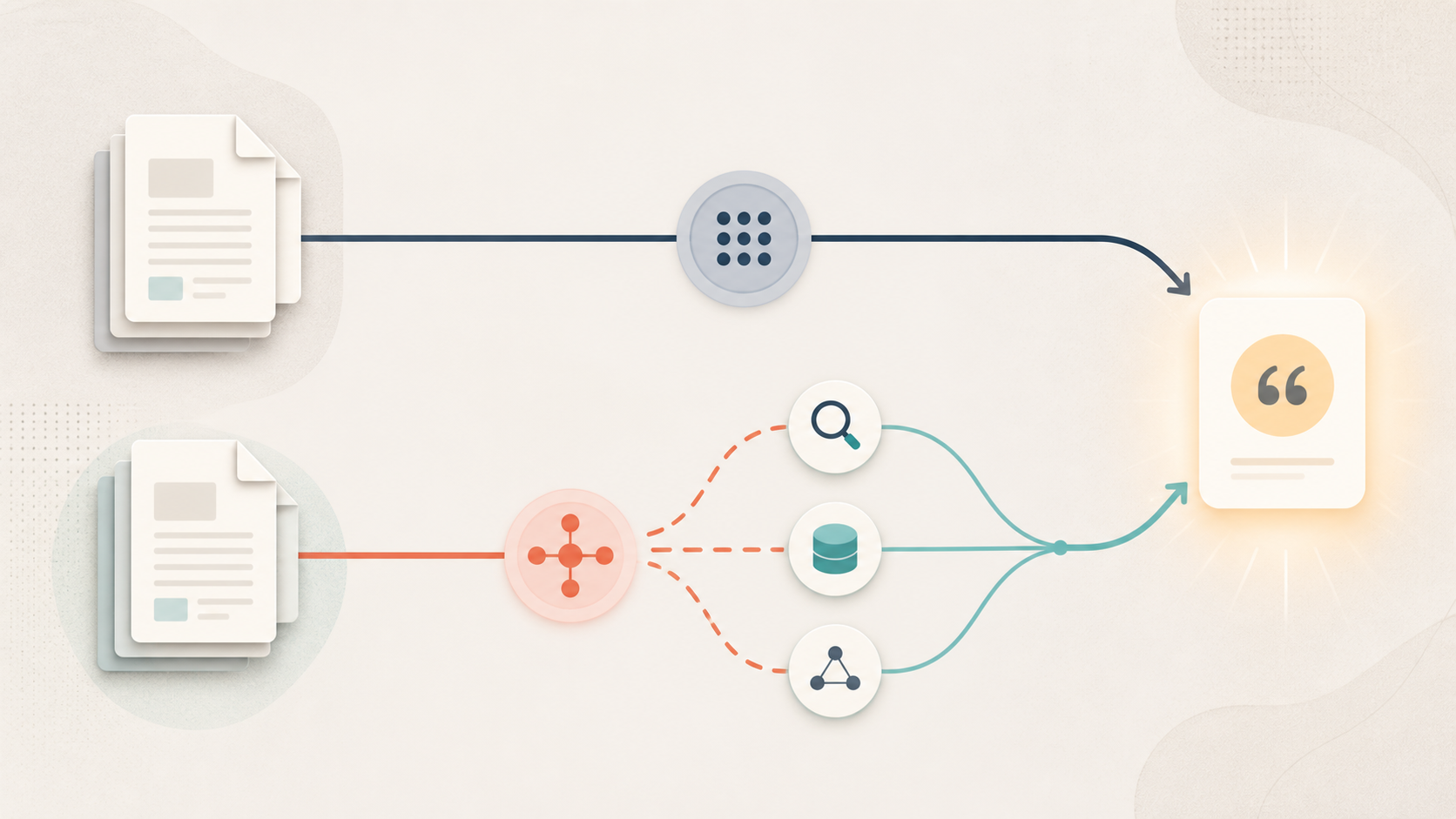
Compare total ownership, not the first invoice
Put these lines in the same worksheet for every option:
| Cost or obligation | Build | Buy | Hybrid question |
|---|---|---|---|
| Initial discovery and workflow design | Internal or contracted | Still required | Which part becomes portable? |
| Integration and credentials | You implement and secure it | You configure and validate it | Who owns the adapter and identity boundary? |
| Evaluation cases and regression runs | You create and run them | Vendor tools may help, but you verify the outcome | Can the same cases run on both paths? |
| Hosting, model use, and usage limits | Your infrastructure and API choices | Subscription, usage, and vendor quotas | Which costs scale with volume? |
| Monitoring and incidents | Your telemetry and response | Vendor telemetry plus your business outcome checks | Can you see enough to act? |
| Policy, privacy, and access reviews | Your controls | Your due diligence plus vendor controls | What evidence will the reviewer accept? |
| Change management | Model, code, prompts, tools | Vendor releases, contract, platform limits | Who gets notified and who tests? |
| Exit | Migration and replacement | Export, termination, and replacement work | What must remain yours from day one? |
The buying side still has real work. A packaged platform may require a license, data sources, credentials, connector configuration, and administrator involvement before an agent can be extended and published (Microsoft connector documentation). That is not a criticism. It is the work you should budget instead of calling the product “no-code” and forgetting it.
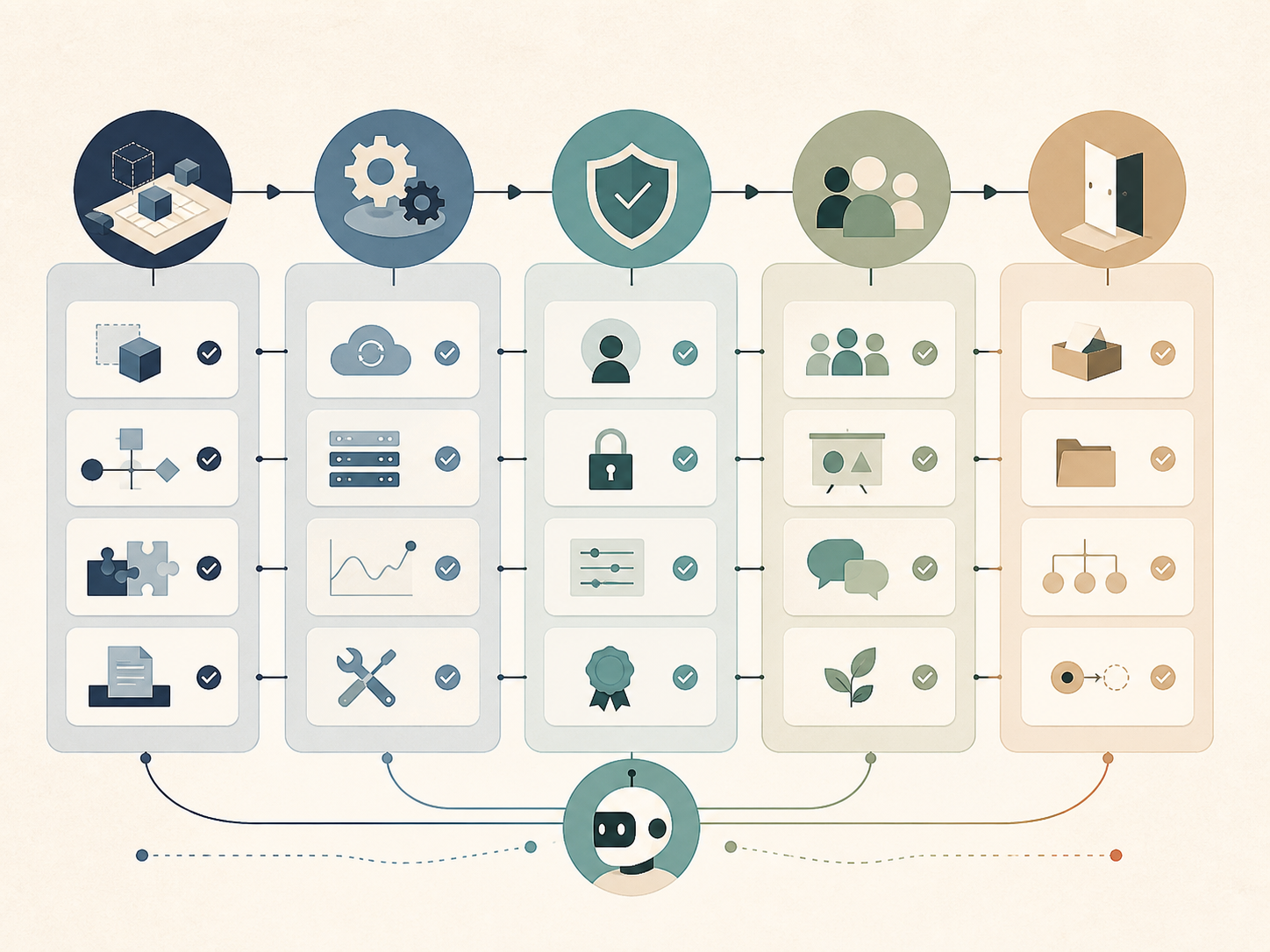
Run a four-week proof before a durable commitment
The proof should compare paths on the same workflow, cases, permissions, and success definition.
- Write the workflow contract. Name the trigger, intended outcome, allowed tools and data, forbidden actions, escalation rule, maximum steps or spend, and the source of truth that proves success.
- Choose a small case set. Include ordinary cases, ambiguous inputs, missing data, tool errors, out-of-scope requests, and at least one case where the correct action is to stop or ask a person. Keep data synthetic or safely sandboxed.
- Configure the buy path and build the thinnest custom path. Do not compare a polished vendor demo with an imaginary build. Make both paths perform the same narrow job and expose the evidence needed for review.
- Run in a bounded environment. Start read-only or approval-gated. Compare outcome correctness, forbidden actions, tool calls, escalations, latency, cost, and how easily the team can diagnose a failure. NIST warns that laboratory tests may not reflect deployment contexts, so treat the proof as evidence for this bounded workflow, not a universal guarantee (NIST).
- Decide with a written rule. Expand, change the boundary, keep the baseline, or stop. Record who owns the next evaluation and what evidence would cause a pause.
The winner is not the path with the prettiest response. It is the path that reaches the intended business state while respecting the boundary, and that your team can continue to operate.

Copy this decision memo

Use this as the artifact you take to a budget, product, or security discussion. The blank values are intentional; they force the decision to stay tied to one workflow.
decision: buy | build | hybrid | stop
workflow: "one named business workflow"
owner: "person accountable after launch"
business_outcome: "state that must change or deliverable that must exist"
why_agent: "why a fixed workflow or one LLM call is insufficient"

build_buy_scores:
  business_edge: 0
  boundary_and_control: 0
  integration_specificity: 0
  operating_capacity: 0
  time_pressure: 0
  exit_risk: 0

non_negotiables:
  - "data and identity boundary"
  - "forbidden action"
  - "human escalation or rollback condition"

proof:
  cases: "case-set location and owner"
  environment: "sandbox, read-only, or approval-gated"
  pass_rule: "outcome and safety threshold"
  evidence: "state checks, traces, approvals, costs, and failures to retain"
  stop_rule: "condition that pauses the pilot"

portability:
  must_export: "policies, tools, cases, traces, and data that must remain usable"
  vendor_dependency_accepted: "yes/no, with a reason"
next_review: "date"
The decision in one sentence
Buy an AI agent when the capability is common and the product can meet your boundaries; build when the workflow is your advantage and you can operate it; choose hybrid when you need purchased infrastructure but must own the business-specific logic. In every case, test one real workflow before you make the architecture permanent.
If you want an outside decision review, Marius Manolachi’s one-to-one AI consulting is a reasonable next step: bring one workflow, its exceptions, and the decision memo. The useful outcome is a defensible ownership choice and a bounded next experiment, not a bigger AI project by default.